
By Venkateswara Rao | Updated July 2026 | 12 min read
If you're trusting a password manager with the keys to your entire digital life — your email, bank accounts, work logins, and everything in between — you have every right to ask a critical question: how safe is it, really? What actually stops the password manager company itself, or a hacker who breaches their servers, from reading all your passwords? The answer lies in cryptography. Behind every reliable password manager is a sophisticated system of encryption designed so that not even the company storing your data can read it. It sounds almost too good to be true, but it's built on decades of proven mathematics. In this guide, we'll break down the cryptographic approaches to password management in plain English — including zero-knowledge architecture, AES-256 encryption, and key derivation functions. By the end, you'll understand exactly what separates a genuinely secure password manager from a risky one, and how to evaluate any tool you're considering.
Why Cryptography Is the Heart of Password Management
A password manager is only worth using if it's genuinely secure. After all, you're consolidating all your passwords into a single vault. If that vault isn't properly protected, you've created a single point of catastrophic failure. The stakes are high:
- A breach could expose every account you own at once.
- Weak encryption could let attackers decrypt your stored passwords.
- A poorly designed system might let the company itself access your data.
This is exactly why the cryptographic foundation behind a password manager matters so much. It's the difference between a fortress and a false sense of security.
The Architecture of Zero-Knowledge Security
The foundation of a reliable password manager lies in its cryptographic approach. Top-tier password management systems utilize what is known as 'Zero-Knowledge Architecture'. This ensures that the service provider holding your encrypted vault has absolutely no mathematical ability to decrypt it.
What Zero-Knowledge Architecture Really Means
In practical terms, zero-knowledge means the company that stores your passwords literally cannot read them — even if they wanted to, even if compelled by a court, even if their entire system were compromised. Here's the key idea: your data is encrypted and decrypted only on your own device, using a key derived from your master password. The company never sees your master password and never receives your unencrypted data. All they store is an encrypted, unreadable blob.
Why Zero-Knowledge Matters in a Breach
Consider what happens when a company suffers a data breach:
- Without zero-knowledge: If a company stores your passwords in a way it can access, a breach exposes everything.
- With zero-knowledge: Even if hackers steal the entire database, they only get mathematically useless ciphertext — scrambled data that's impossible to decrypt without your master password.
This is the gold standard, and any password manager worth trusting should use it.
Encryption Methods and Key Derivation
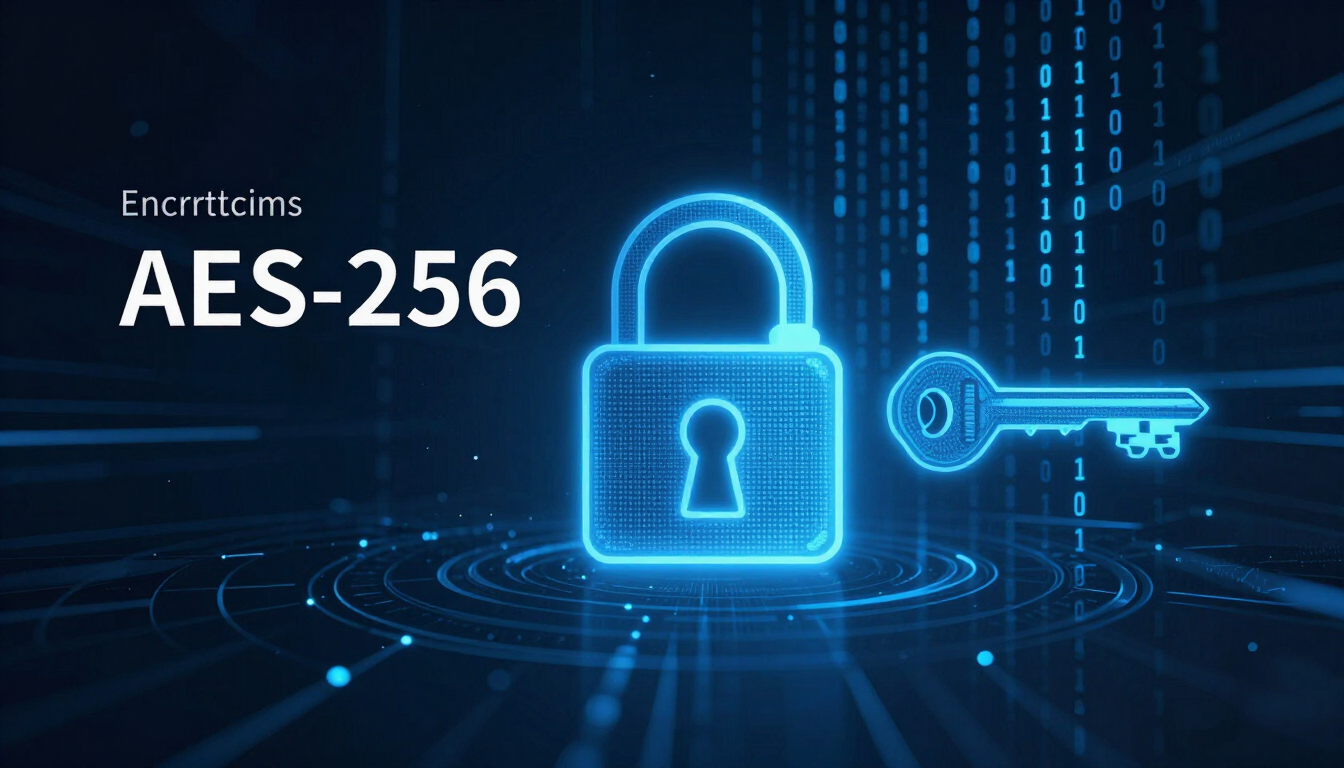
When you input your master passphrase, a key derivation function (such as PBKDF2 or Argon2) transforms it into an encryption key. This key is used locally on your device (via AES-256 bit encryption) to lock or unlock your vault data. The vault provider only receives the fully encrypted blob. If their servers are breached, the hackers only obtain mathematically useless ciphertext. Let's break this process down step by step so you can see exactly why your data stays safe.
Step 1: You Enter Your Master Password
Everything begins with your master password (or master passphrase) — the one password you must remember. This is the key to your entire vault, so it should be strong and unique. If you need help creating one, see our guide on how to create a strong password.
Step 2: Key Derivation Transforms It
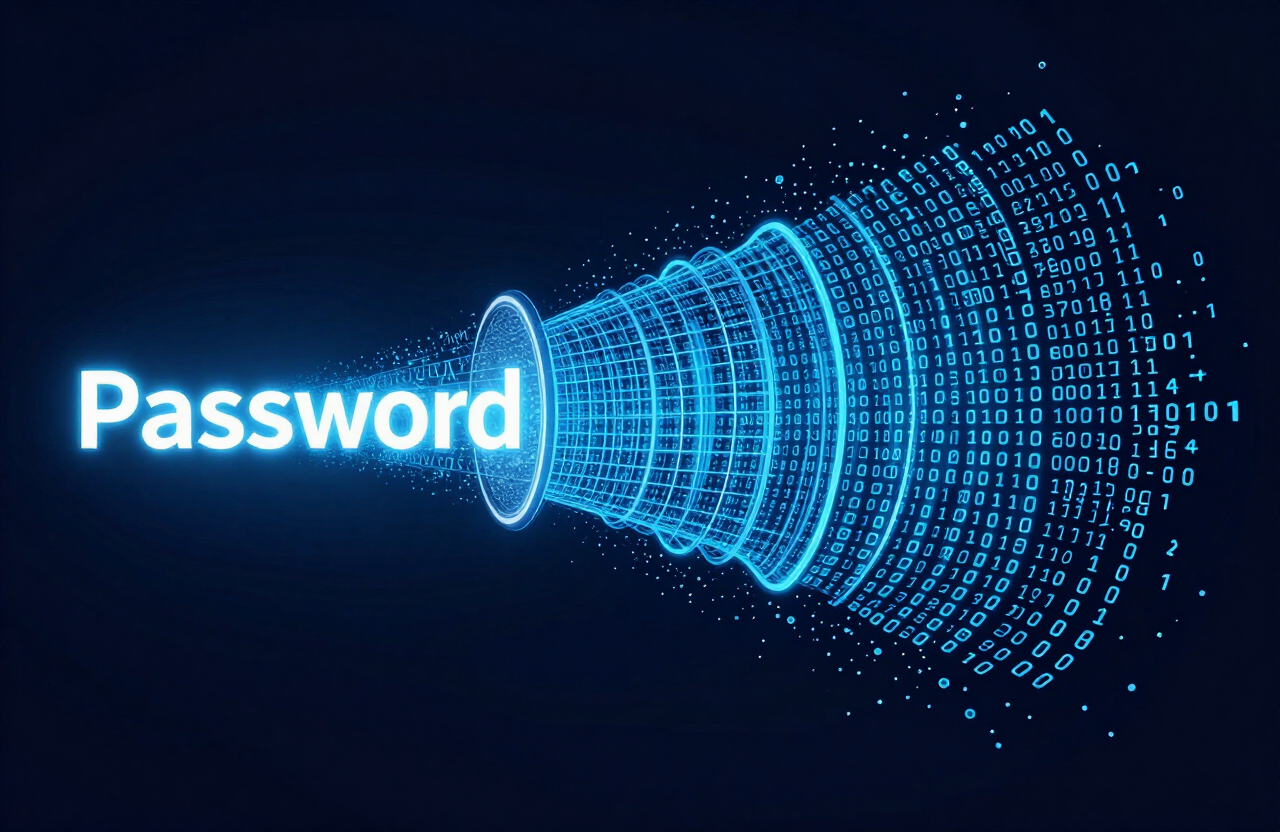
Your master password isn't used directly for encryption. Instead, it's fed through a key derivation function (KDF) — such as PBKDF2 or Argon2 — which transforms it into a strong encryption key.
Step 3: Local Encryption With AES-256
The derived key is used locally on your device to encrypt your vault data using AES-256 bit encryption — one of the most secure and widely trusted encryption standards in the world. Crucially, this happens on your device, not on the company's servers.
Step 4: Only the Encrypted Blob Is Stored
The password manager's servers only ever receive the fully encrypted blob — a scrambled, unreadable version of your vault. If their servers are breached, attackers obtain nothing but ciphertext they cannot decrypt.
Understanding Key Derivation Functions (PBKDF2 & Argon2)
Key derivation functions deserve special attention because they're a critical defense against attackers.
Why Not Use the Master Password Directly?
If your master password were used directly as the encryption key, attackers could try to guess it using brute-force attacks — testing billions of possibilities per second. Key derivation functions are specifically designed to make this impractical.
How KDFs Protect You
A good key derivation function is deliberately slow and resource-intensive. It applies thousands (or hundreds of thousands) of iterations and, in the case of Argon2, requires significant memory.
- For you: The slight delay when unlocking your vault is unnoticeable — a fraction of a second.
- For attackers: Multiplied across billions of guesses, that "slowness" makes brute-forcing your master password computationally infeasible.
PBKDF2 vs. Argon2
- PBKDF2 — A long-established, widely trusted KDF recommended by NIST. It's proven and reliable.
- Argon2 — The winner of the Password Hashing Competition and considered the modern gold standard. Its memory-hard design makes it especially resistant to attacks using specialized hardware.
To learn how this relates to how passwords are stored, read our guide on what is a hashed password.
What Makes AES-256 So Secure?
AES-256 (Advanced Encryption Standard with a 256-bit key) is the encryption algorithm trusted by governments, banks, and security professionals worldwide. In practical terms, AES-256 has never been broken through a direct attack. The number of possible keys is so astronomically large (2²⁵⁶ combinations) that brute-forcing it would take longer than the age of the universe, even with all the world's computing power combined. This is why AES-256 is used to protect classified government information.
The catch? Encryption is only as strong as the master password protecting it. AES-256 is uncrackable, but a weak master password can be guessed — which is why the key derivation function and a strong master password are so essential.
Cryptographic Standards and Audits
Relying on proprietary or "secret" encryption algorithms is a massive red flag. Cryptographic password management relies entirely on open-source, mathematically proven, and peer-reviewed standards. You can explore how client-side cryptography works securely in your browser by testing our offline password generator and hash calculator.
Red Flags to Watch For
Not all password managers are created equal. Watch out for these warning signs:
- Proprietary or "secret" encryption — Legitimate cryptography relies on open, peer-reviewed standards like AES-256. Secret algorithms haven't withstood public scrutiny.
- No zero-knowledge architecture — If a company can access your passwords, your data is at greater risk.
- No independent security audits — Reputable managers undergo regular third-party audits and publish the results.
- Weak or outdated encryption — Look for AES-256 combined with PBKDF2 or Argon2.
Why Open-Source and Audits Matter
The best cryptographic security is transparent security. Rather than hiding how their encryption works, trustworthy password managers embrace open standards and independent verification. This aligns with Kerckhoffs's principle, which states that a system should remain secure even if everything about it — except the key — is public knowledge.
Key Takeaways
Understanding the cryptographic approaches to password management empowers you to choose a genuinely secure tool rather than trusting blindly. The best systems combine three critical elements:
- Zero-knowledge architecture — so the company can never read your data.
- Strong key derivation (PBKDF2 or Argon2) — to protect your master password from brute-force attacks.
- AES-256 encryption — the proven, effectively unbreakable standard.
Together with open-source transparency and independent audits, these form the foundation of trustworthy password management. And remember: even the strongest encryption depends on a strong master password. Create an unbreakable one with our free password generator, and you'll have security you can genuinely trust.
To see how these cryptography standards apply to corporate environments, read our complete 2026 guide to password security best practices.
Frequently Asked Questions
What does 'zero-knowledge' mean in a password manager?
Zero-knowledge means the password manager provider has no mathematical ability to decrypt your data. Your passwords are encrypted and decrypted only on your device using your master password, so the company only ever stores unreadable ciphertext — even they cannot access your passwords.
Is AES-256 encryption crackable?
No. AES-256 has never been broken through a direct attack. With 2²⁵⁶ possible keys, brute-forcing it would take longer than the age of the universe, even with all the world's computing power. It's the standard used to protect classified government data.
What is a key derivation function in cryptography?
A key derivation function (KDF), such as PBKDF2 or Argon2, transforms your master password into a strong encryption key. It's deliberately slow and resource-intensive, which makes brute-force attacks against your master password computationally infeasible.
What is the difference between PBKDF2 and Argon2?
Both are secure key derivation functions. PBKDF2 is a long-established, NIST-recommended standard, while Argon2 is the modern gold standard, using a memory-hard design that resists attacks from specialized hardware. Both are excellent choices for cryptographic password management.
How does encryption protect passwords in a password manager?
A password manager uses AES-256 encryption to scramble your vault data on your own device before it's ever stored. Combined with zero-knowledge architecture, this ensures that only you — using your master password — can decrypt and access your passwords.
Is a password manager safe if the company gets hacked?
Yes, if it uses zero-knowledge architecture and AES-256 encryption. In a breach, attackers only obtain encrypted ciphertext that is mathematically useless without your master password, so your actual passwords remain protected.
What is the most secure encryption for password management?
AES-256 encryption combined with a strong key derivation function like Argon2 or PBKDF2 is considered the most secure approach. Paired with zero-knowledge architecture and independent security audits, this forms the gold standard for cryptographic password management.
Why should password managers use open-source encryption?
Open-source, peer-reviewed encryption allows security researchers worldwide to inspect the code for vulnerabilities. Proprietary or "secret" algorithms haven't withstood public scrutiny, making open, mathematically proven standards far more trustworthy.
Can hackers break AES-256 bit encryption?
No practical method exists to break AES-256 encryption. Its 256-bit key length creates an astronomical number of possible combinations, making brute-force attacks computationally infeasible with current or foreseeable technology.
Does a strong master password matter if encryption is unbreakable?
Absolutely. Even with unbreakable AES-256 encryption, a weak master password can be guessed through brute-force attacks. A long, unique master password or passphrase is essential to keep your encryption effective.
Leave a comment
Comments are moderated before appearing. Please keep it respectful and on-topic. Your email is required for verification but is never displayed publicly or shared.