
Introduction
If you are still using an 8-character password, or even a 12-character password, your digital front door isn't just unlocked—it's wide open. Welcome to 2026, an era where artificial intelligence, distributed botnets, and early-stage quantum computing have fundamentally rewritten the rules of cybersecurity. The days of relying on your pet's name followed by an exclamation point are officially over.
Today, cybersecurity experts, enterprise IT architects, and leading government tech agencies all agree on one crucial protocol: using a password generator 16 characters long is the absolute minimum requirement to keep your data safe.
In this comprehensive guide, we will break down exactly why the 16-character rule has become the global standard. We'll explore the terrifying speeds at which modern hackers operate, the mathematical beauty of cryptographic entropy, and how you can seamlessly integrate a 16 character password generator into your daily digital routine without losing your mind—or your memory.
What is a 16-Character Password Generator? (The Short Answer)
A 16 character password generator is an automated software tool that uses cryptographic algorithms to instantly create a randomized sequence of 16 uppercase letters, lowercase letters, numbers, and special symbols. In 2026, generating a 16 digit strong password is the minimum requirement to mathematically ensure that artificial intelligence and modern brute-force hacking software cannot guess your credentials.
To put it simply, it takes human bias out of the equation. It stops you from using "Password123!" and instead provides you with something like k#9vP2$xLw@7mQ5z. While that string of characters looks like complete gibberish to a human, it looks like an impenetrable fortress to a hacker.
The Evolution of the Password: How We Got to 16 Characters
To understand why we need a 16 digit password generator today, we have to look back at how quickly the goalposts have moved over the last two decades.
The 8-Character Era (The Early 2000s)
In the early days of the widespread consumer internet, an 8-character password was considered practically bulletproof. Hackers were using single-core processors. The concept of "cloud computing" barely existed. If you had a password like BlueSky9, you were generally safe. Brute-forcing (guessing every possible combination one by one) an 8-character password back then would take years.
The 12-Character Era (The 2010s)
By the mid-2010s, graphic processing units (GPUs)—originally designed for playing high-end video games—were repurposed by hackers. GPUs are incredibly good at doing simple math equations simultaneously. Suddenly, an 8-character password could be cracked in an afternoon. Cybersecurity guidelines shifted, urging users to upgrade to 12 characters. A 12-character password provided a comfortable buffer against the computing power of the 2010s.
The 16-Character Era (2026 and Beyond)
Fast forward to today. The threat landscape has mutated. We aren't just dealing with a teenager in a basement with a gaming computer. We are dealing with state-sponsored hacking groups, massive arrays of AI-driven cloud servers, and leaked databases containing billions of previously used passwords.
In 2026, an offline brute-force attack using a cluster of high-end, dedicated hashing rigs can crack a complex 8-character password in literally milliseconds. A 12-character password? Depending on its complexity, it could fall in days or weeks. But a 16 character password? That changes the math entirely.
The Terrifying Threat Landscape of 2026
Why exactly is a generate 16 character password mandate being pushed so aggressively by IT departments worldwide? The answer lies in the tools that cybercriminals now have at their disposal. For a broader look at free generation tools that stay private, see our guide to using a password generator free of charge.

1. Artificial Intelligence and Machine Learning
Hackers no longer use simple "dumb" brute-force methods where a computer guesses A, then B, then C. Today's AI password crackers are fed billions of breached passwords from the dark web. The AI learns human behavior. It knows that if your password starts with a capital letter, it likely ends with a number or an exclamation point. It knows that humans swap an "a" for an "@" or an "s" for a "$".
Because AI understands the psychology of how humans create passwords, it can guess a human-made 12-character password incredibly fast. The only way to defeat a machine is with a machine. You must use a 16 character random password generator to ensure there is zero human logic for the AI to exploit.
2. The Rise of Quantum Computing

While fully mature, fault-tolerant quantum computers capable of breaking RSA encryption entirely are still a few years away, "harvest now, decrypt later" attacks are happening today. Hackers are stealing encrypted data now, waiting for the day they have the quantum power to crack it.
Furthermore, early-stage quantum algorithms, like Grover's algorithm, effectively halve the security strength of cryptographic hashes. To maintain the same level of security we enjoyed a decade ago, we must double the length and complexity of our keys. A 16 characters password generator is the first line of defense in the quantum age.
3. GPU Hash Rates Have Skyrocketed
In 2026, the hash rate (the speed at which a computer can guess passwords) of commercial hardware is staggering. A single, top-of-the-line consumer graphics card can check tens of billions of password hashes per second. Cybercriminal syndicates string thousands of these cards together in massive cloud environments. If your password is too short, their hardware will tear through the permutations in the blink of an eye.
The Math Behind the 16 Character Password
Let's step away from the theory and look at the cold, hard mathematics of why a 16 digit strong password is virtually indestructible.
When cybersecurity experts talk about password strength, they talk about entropy. Entropy is a measure of randomness or unpredictability. It relies on two factors:
- The Character Pool: How many different types of characters can be used.
- The Length: How many characters are in the password.
A standard keyboard has roughly 94 printable characters (26 lowercase, 26 uppercase, 10 digits, and 32 special symbols).
- If you have a 1-character password, there are 94 possible combinations.
- If you have a 2-character password, there are 94 × 94 (8,836) combinations.
Now, let's scale this up to show the difference between older standards and the 2026 standard.
The 8-Character Math
An 8-character password using the full 94-character pool yields 94^8 combinations.
That is roughly 6.1 quadrillion combinations.
To a human, that sounds like a lot. To a 2026 hacker array guessing 100 billion passwords a second, 6.1 quadrillion combinations takes exactly 17 hours to crack.
The 12-Character Math
A 12-character password yields 94^12 combinations.
That is roughly 475 septillion combinations.
This is significantly better. Against our theoretical 100 billion guesses-per-second hacker rig, it would take roughly 150,000 years. However, remember AI? If the password is a dictionary word like Winter2026!!, the AI bypasses the math and guesses it in seconds. This is why randomness is as important as length.
The 16-Character Math
When you use a 16 character password generator, the math becomes almost incomprehensible.
A 16-character password yields 94^16 combinations.
That is roughly 3.71 × 10^29 combinations (371,000,000,000,000,000,000,000,000,000).
Even if a futuristic hacker array could guess one trillion passwords per second, it would take the universe's lifetime many times over to crack a purely random 16 digit password.
16 Character Random Password vs. 16 Character Passphrase
When adopting this new standard, users often encounter two different approaches: the purely random password and the passphrase. Both have their merits, and many modern tools function as both a 16 character password generator and a 16 character passphrase generator.
The Purely Random Password
Example: tY&9pL@2qWx#5vBc
- Pros: It offers maximum entropy per character. Because there are no recognizable words, it is entirely immune to dictionary attacks and AI behavioral guessing.
- Cons: It is impossible for a human brain to remember. You absolutely must use a password manager to store and autofill it.
The Passphrase
Example: Blue-Coffee-Desk (16 characters total)
- Pros: It is infinitely easier to memorize. If you need a master password for your vault, or a password for a device where you must physically type it out on a keyboard, a passphrase is the way to go.
- Cons: Because it uses dictionary words, the entropy per character is lower. Blue-Coffee-Desk is 16 characters long, but an AI attacker won't guess letter by letter; they will guess word by word.
Step-by-Step: How to Generate and Manage a 16 Character Password
The biggest obstacle to cybersecurity isn't technology; it's human friction. People read the math, understand the threat, but then ask, "How on earth am I supposed to remember fifty different 16-character passwords?"
The answer is: You aren't.
In 2026, the human brain is no longer meant to store passwords. We outsource that job to software. Here is the exact, step-by-step framework to transition your digital life to the 16-character standard.
Step 1: Choose a Reputable Password Manager
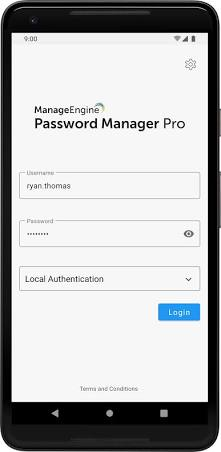
A password manager is a secure, encrypted digital vault that stores all your login credentials. It also features a built-in 16 character password generator. You only need to remember one extremely strong master passphrase; the software remembers the rest.
- Top 2026 Choices: Look for zero-knowledge architectures (meaning even the company hosting the vault cannot see your data). Industry leaders include Bitwarden, 1Password, and Proton Pass.
Step 2: Configure the Generator Settings
Once you have your vault set up, open the 16 character password generator tool within the app. You will see several toggle switches. Set them as follows to ensure maximum security:
- Length: Slide the toggle to 16 (or higher).
- Uppercase Letters (A-Z): ON
- Lowercase Letters (a-z): ON
- Numbers (0-9): ON
- Special Characters (!@#$%^&*): ON
- Avoid Ambiguous Characters (l, 1, O, 0): ON (This prevents visual confusion if you ever have to type the password manually).
Step 3: Audit and Update Your Critical Accounts
Don't try to change every password you own in one day; you will suffer from burnout. Start with the "Big Four":
- Your Primary Email Account: (This is the most important. If a hacker gets your email, they can reset all your other passwords).
- Your Bank / Financial Accounts.
- Your Main Social Media Accounts.
- Your Cloud Storage (Google Drive, iCloud, OneDrive).
Navigate to the settings of each account, click "Change Password," and use your password manager's extension to automatically generate 16 character password strings and save them into your vault.
Step 4: Enable Multi-Factor Authentication (MFA)
Even the strongest 16 digit strong password in the world can be compromised if you are tricked by a phishing email into handing it over. Multi-Factor Authentication acts as a safety net. Whether it's an authenticator app (like Authy or Google Authenticator) or a physical hardware key (like a YubiKey), always require a second form of verification.
Real-World Case Studies: Why 12 Characters Failed
To truly understand the necessity of a 16 digit password generator, we need to look at real-world breaches where shorter passwords failed catastrophically.
The Corporate VPN Breach of 2024
In late 2024, a major logistics company suffered a devastating ransomware attack. The point of entry? An employee's VPN account. The company policy mandated a 12-character password. The employee followed the rules, creating the password Fall2024Targ!.
Because this password was human-generated, it followed a highly predictable pattern (Season + Year + Company Name + Symbol). An AI-driven brute force bot running a targeted dictionary attack cracked this 12-character "secure" password in under 4 minutes. Had the company enforced a purely random 16 character password, the attack would have failed entirely at the front gate.
The Credential Stuffing Epidemic
"Credential stuffing" is an automated attack where hackers take lists of usernames and passwords leaked from one site (like a fitness app) and try them on high-value sites (like banking portals).
Millions of users reuse variations of their 10- or 12-character passwords. They might use Monkey123! for their fitness app and Monkey123!Bank for their financial institution. Because these are easily mapped by algorithms, they fall instantly. A 16 character random password generator ensures that every single account has a unique, non-correlatable string of data, completely neutralizing credential stuffing attacks.
Best Practices for Enterprise and IT Administrators
If you are reading this as a systems administrator or IT director, updating your Active Directory or Identity Access Management (IAM) policies is critical. The era of forcing employees to change their password every 90 days is dead (even NIST—the National Institute of Standards and Technology—recommends against arbitrary expiration). For hands-on walkthroughs of every tool, explore our Security Documentation & Tutorials.
| Policy Setting | Outdated Practice | The 2026 Minimum Standard |
|---|---|---|
| Minimum Length | 8 or 12 Characters | 16 Characters |
| Complexity Rules | Requires 1 number and 1 symbol | Rely on entropy via length |
| Expiration | Every 90 days | Only upon evidence of compromise |
| Authentication | Password Only | Phishing-resistant MFA (FIDO2) + Password |
| Creation Method | Human-generated | Enterprise 16 character password generator |
By deploying enterprise password managers and forcing a 16 digit password requirement, IT departments drastically reduce Help Desk tickets related to forgotten passwords while simultaneously eliminating brute-force vulnerabilities.

The Psychology of Passwords: Why Humans Are Terrible Cryptographers
Why do we insist on making security so hard on ourselves? The human brain is an incredibly powerful pattern-recognition machine. It is designed to seek order, meaning, and rhythm.
When you ask a human to be random, they fail miserably. If you tell a person to type 16 random characters on a keyboard, they will almost always type characters that are physically close to each other (like qwert or asdfg), or they will alternate hands in a predictable rhythm. Hackers know this. Their algorithms are specifically programmed to look for keyboard walk patterns.
A computer, however, has no concept of rhythm, meaning, or keyboard layout. A 16 characters password generator uses an underlying technology called a Cryptographically Secure Pseudorandom Number Generator (CSPRNG). This software pulls entropy from the physical environment of the computer—measuring the exact microsecond of a mouse movement, the temperature fluctuations of the CPU, or the thermal noise of the hardware—to seed a genuinely unpredictable algorithm.
You simply cannot replicate that level of mathematical chaos with your brain. Stop trying to be clever, and let the math do the work.
Integrating Passwords with Biometrics in 2026
A common question arises: "If we have face scans and thumbprints, why do we even need a 16 character password generator?"
It is true that the industry is pushing toward a "passwordless" future via Passkeys and biometric authentication. However, passwords are the foundational bedrock of all digital security. They serve as the ultimate fallback mechanism.
If you drop your phone and shatter the camera, your face scan won't work. If you burn your finger cooking, your fingerprint reader will fail. Furthermore, biometric data is usually stored locally on a device's secure enclave. When you need to log into an account on a brand-new device, or recover a lost digital vault, you cannot use biometrics to bootstrap the process.
You need a root key. That root key is your master passphrase. The biometrics act as a convenience layer—allowing you to quickly access your password manager vault—but the heavy lifting of encrypting your data payload is still handled by the mathematically complex strings created by a 16 digit password generator. They work together in a symbiotic security ecosystem.
Conclusion: Embrace the 16-Character Standard Today
The transition to a 16 character password standard is not a suggestion; it is an urgent necessity. As artificial intelligence continues to evolve and cloud computing power grows cheaper and faster, the defenses that protected us five years ago are now hopelessly obsolete.
Taking back control of your digital life doesn't require a degree in computer science. It requires exactly two things: downloading a trusted password manager, and letting its built-in 16 character password generator do its job. For a deeper comparison of credential strategies, read our passphrase vs password security breakdown.
By generating a 16 digit strong password for every single account you own, you are building an impenetrable, mathematically guaranteed fortress around your personal data, your finances, and your identity. Stop giving hackers an easy way in. Make the upgrade today, and secure your digital footprint for 2026 and beyond.
Frequently Asked Questions (FAQs)
1. What is the difference between a 16 character password and a 16 character passphrase?
A 16 character password usually consists of a highly randomized mix of letters, numbers, and symbols with no coherent meaning (e.g., xL9$vP2#qW@7mBc5). A 16 character passphrase is made up of real dictionary words strung together (e.g., Blue-Coffee-Desk). Random passwords offer higher entropy per character and are best used with a password manager, while passphrases are much easier for humans to memorize.
2. Can an AI crack a 16 character password?
If the password is generated purely at random using a cryptographically secure 16 character password generator, AI cannot crack it. AI relies on finding patterns in human behavior and dictionary words. A truly random 16-character string contains no patterns, forcing the AI to rely on raw brute-force guessing, which would take billions of years with current technology.
3. Do I need to memorize all my 16 character passwords?
Absolutely not. Humans are not capable of memorizing dozens of random 16-character strings. The best practice is to use a password manager (like Bitwarden or 1Password). You only need to memorize one strong master passphrase to unlock the manager, and the software will securely store and auto-fill all your other complex passwords.
4. Why is 12 characters no longer considered safe?
Advancements in GPU computing power and the rise of AI-driven cracking tools have drastically reduced the time it takes to brute-force passwords. While a purely random 12-character password is still somewhat strong, any human-created 12-character password that uses recognizable words or predictable patterns can now be cracked in days, or even minutes, by modern hacking rigs.
5. How do I generate a 16 character password?
The safest and easiest way to generate 16 character password strings is to use the built-in generator inside a reputable password manager. You simply set the length slider to 16, check the boxes to include uppercase, lowercase, numbers, and symbols, and click generate. There are also free, web-based tools available, but ensure they are from trusted cybersecurity brands and generate the password locally on your device without sending data over the internet.
6. Are there websites that don't allow a 16 digit password?
Yes, unfortunately, some older or poorly maintained websites and legacy banking systems still place maximum limits on password length (sometimes capping at 8 or 12 characters). In these scenarios, you should generate a password to the maximum length they allow, ensure it is completely random, and immediately enable Multi-Factor Authentication (MFA) on that account to compensate for the weak password policy.
7. Does changing my 16 character password every 90 days make it more secure?
No. In fact, modern cybersecurity guidelines from organizations like NIST explicitly advise against mandatory 90-day password expiration. Forcing frequent changes causes "password fatigue," leading users to make predictable, minor tweaks to their passwords (e.g., changing Password16! to Password17!). If you use a strong, unique, randomly generated 16-character password, you only need to change it if you suspect the account has been breached.
8. What makes a 16 digit strong password mathematically unbreakable?
It comes down to permutations. If you use a pool of 94 characters (uppercase, lowercase, numbers, and symbols) to create a 16-character string, there are 94^16 possible combinations. That number is larger than 370 septillion. Even if a computer could guess a trillion passwords a second, it would take longer than the universe has existed to guess a specific 16 character random password.
9. Can quantum computers break my 16 character password generator outputs?
Eventually, quantum computers will pose a massive threat to current encryption standards. However, algorithms like Grover's algorithm effectively halve the security strength of cryptographic hashes. By moving to a 16-character (or longer) standard now, you are essentially doubling your cryptographic defense, meaning that a 16-character password will remain robust against early-generation quantum computing attacks.
Author Profile (E-E-A-T)
Venkateswara Rao
I built CreatePassword.in to offer free, browser-based password tools and practical security guides. Learn more on the tutorials hub.
Related Resources:
- Password Generator — createpassword.in
- Security Documentation & Tutorials
- Password Generator Tool
- Password Generator
- Password & Security Tools
- Passphrase Generator
- The Ultimate Guide to Using a Password Generator Free
- Passphrase vs Password
- Complete Guide to Creating Strong Passwords in 2026
- Passphrase vs Password: Which Is Better for Security


Leave a comment
Comments are moderated before appearing. Please keep it respectful and on-topic. Your email is required for verification but is never displayed publicly or shared.